
SCHMID'S HUHN TURN A DEAD COMPOSER INTO A LIVING ARGUMENT
After thirteen years of playing together, Schmid's Huhn has built a level of trust that is rarely found. You will feel the bass stabilizing; you will hear the drums doing more than accompanying the rhythm (keeping the time); you will hear two horns circling each other before you realize it; and you will feel the strength of the physical relationships between them. This type of trust can only be described as 'conscience-based muscular memory'.
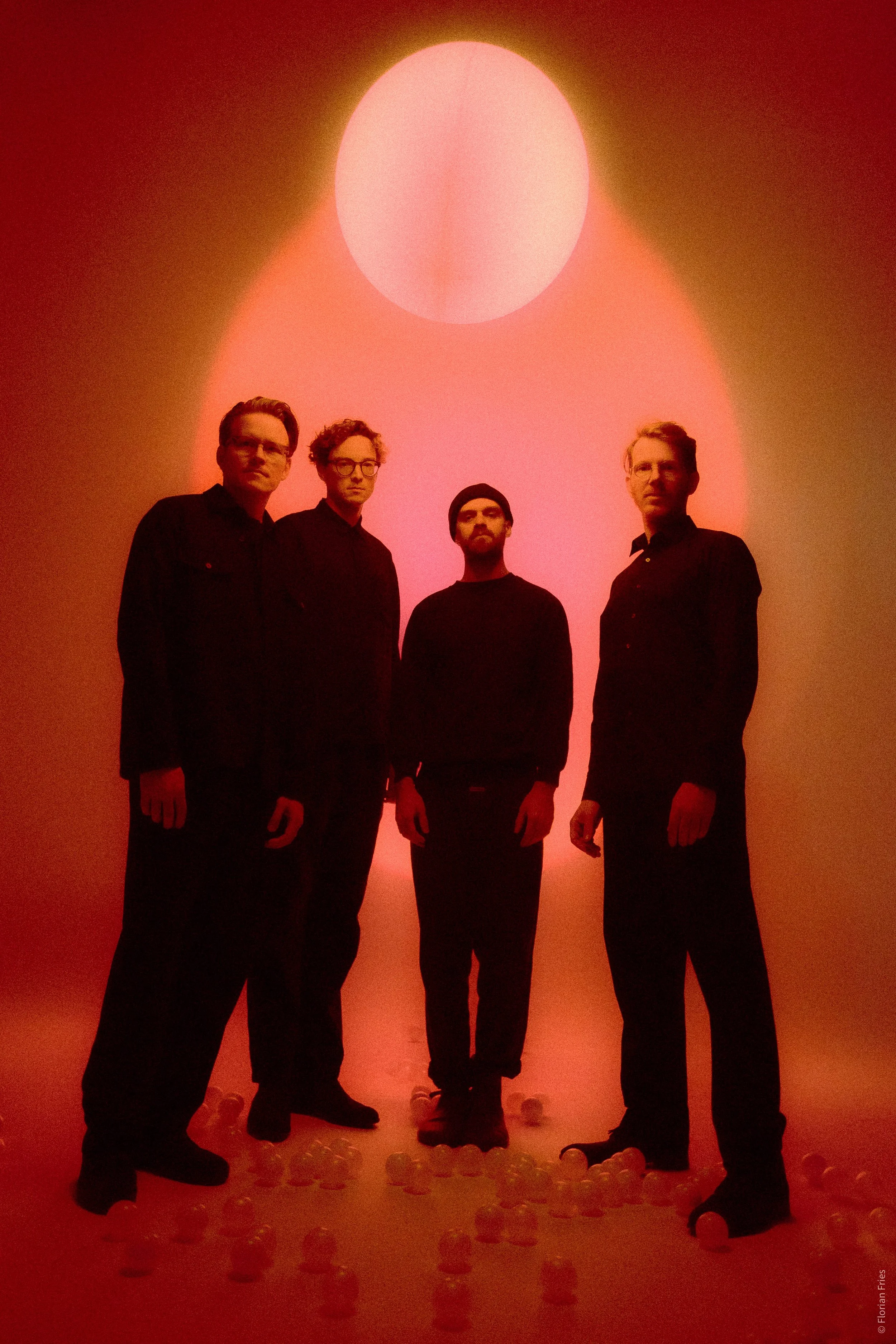
Florian Fries©
This is what forms the basis for Schmid's Huhn’s fourth album, and it’s an unusual base. Paul Hindemith wrote 'Des kleinen Elektromusikers Lieblinge' specifically for three Trautoniums. The Trautonium is an electric musical instrument that has not been widely used and was invented for a world that never materialized. The quartet does not interpret, but interrogates this composition. They break the melodic kernels into smaller and smaller pieces until there is nothing left, and then reassign the intervals found between them to create new intervals. Something that was once formal has become instinctual, for the musicians and the audience alike.
This has produced “The Little Jazz Musicians” on the line between the three major musical categories that have tried to be defined; i.e., post bop heat, cool jazz restraint and the type of structural analysis usually associated with Steve Coleman’s compositions. They deserve all of this praise.
Next comes “Reflections on Hindemith”, five movements of pure improvisation with nothing written down – totally real. No ‘safety net’ to fall back on. Just four musicians who have spent more than a decade learning just how far each will go before being caught. Frankfurter Rundschau described this as a high wire act with four performers who never fell off of the wire. This is accurate; however, it does not also accurately portray the tremendous amount of ‘nerve’ required to even attempt such an endeavor.
The lead reed work by Stefan Karl Schmid and Leonhard Huhn is interspersed with both ‘conversational’ and ‘confrontational’ passages. The other two musicians, Stefan Schönegg and Fabian Arends are responsible for holding the architecture without ever resembling architects. The music is ‘jazz’, yet demonstrates enough respect for the sources it came from, that they can take them apart and put them together in their own image. Not a tribute to the originals, but rather transformational.